Draw a 4×4 empty square. Draw two diagonals. Start counting all the squares from the top left towards right. Now start writing numbers 1 to 16, count all squares and write numbers ONLY IN THE BLANK SQUARES (2,3,5,8,9,12,14,15 are to be written) Now start writing number from the bottom most right square towards left, count all squares, BUT WRITE NUMBERS ONLY IN THE SQUARES HAVING DIAGONAL LINES ONLY (1,4,6,7,10,11,13 AND 16) ARE TO BE WRITTEN. Magic square 4×4 is ready.
Latest council scheme set to reduce flood risk at Wilbury Way Open Space, reports Simon Allin, Local Democracy Reporter
Wilbury Way Open Space, which is bordered to the north by Pymmes Brook
Plans for a new wetlands area in Edmonton to protect homes from flooding have been approved by councillors.
The wetlands scheme is set to be created in Wilbury Way Open Space,
which lies between the North Circular Road and Whitehead Close and is
bordered by Pymmes Brook. Designed to capture water during extreme
weather events, it will also provide a wildlife habitat and become a new
amenity for residents.
The project, which is the latest in a series of flood-prevention
schemes introduced across the borough by Enfield Council, was approved
during a meeting of the authority’s planning committee on Tuesday.
Planning officer Gideon Whittingham told the committee the scheme
would involve creating four wetland cells, with the spoil excavated used
to construct an embankment at the side of Pymmes Brook to retain water
during extreme rainfall events.
He added that although twelve trees would be removed to make way for
the scheme, 40 semi-mature trees would be planted, alongside hundreds of
saplings.
Under questioning from Conservative committee member Mike Rye, Gideon
said an area used by young people to play football would remain
“subject to the construction process”.
Responding to Labour’s Doug Taylor, who also raised concerns over the
impact on play space, the planning officer said the construction
process would last between ten and twelve weeks.
According to the planning report, a playground at the site “will be retained and improved through better drainage”.
The application was unanimously approved by members of the committee.
Pioneers delivering an inclusive, sustainable future.
Ashden Awards finalists: UK pioneers tackle urgent climate challenges.
September 4, 2023
News
Posted By:
Craig Burnett
Editor
Climate charity Ashden has revealed the finalists for its 2023 awards – pioneers delivering an inclusive, sustainable future.
Three of eight award categories focus on the UK. Finalists from
London to Liverpool are changing our relationship with nature and
delivering the new technologies and funding models essential for
reaching net zero.
The Ashden Award for Future Farmers
backs pioneers developing skills for sustainable land management.
Agriculture is responsible for 10% of UK Greenhouse Gas Emissions. But a
growing number of consumers are interested in how their food is
produced, and new rules are to set to channel government subsidies to
farmers who work more sustainably.
The Ashen Award for Energy Innovation
will reward an organisation with the potential to create large-scale
impact. The key drivers of UK energy use include our homes – 19 million
properties need upgrading to become more energy efficient by 2035.
Taking on this challenge will create work, tackle fuel poverty and
social inequality.
Finally, the Ashden Award for Nature Recoverers
celebrates inclusive, community-focused adaptation initiatives.
Restoring and protecting waterways and green spaces will lessen the
impact of extreme weather – such as the record-breaking heat of 2022.
Projects delivered with local people also boost health and wellbeing,
and can be a gateway for more of us to get involved in climate action.
Government and funders must back positive vision for net zero UK
Dr Stephen Hall, Head of Awards at Ashden, said: “Our finalists are
boundary-pushing pioneers cutting emissions and restoring nature.
Crucially, they show how green jobs and community projects can drive a
just transition and more equal society.
“This blows apart the ridiculous idea that net zero will make us all
worse off. Politicians should put our finalists and other trailblazers
at the heart of inclusive, ambitious plans for a sustainable future.
“They are taking on urgent national challenges, like upgrading homes
and changing our relationship with the environment. But they can’t do it
alone – investment and sympathetic policies are absolutely essential.”
The 2023 Ashden Awards also feature five categories focused on energy
access and natural climate solutions in the Global South. Discover them
here [LINK].
The 2023 Ashden Awards: UK finalists
Ashden Award for Energy Innovation – Accelerating the UK’s net zero journey
tepeo’s Zero Emission Boiler (ZEB®) is a plug-n-play replacement for
existing fossil fuel boilers, that works with a hot water tank to
deliver low carbon and low cost home heating in the UK.
Ashden Award for Local Nature Recoverers – Celebrating inclusive, community-focused adaptation initiatives.
Supported by the Lund Trust, a charitable fund of Lisbet Rausing and Peter Baldwin
Working with local residents, this collaboration has restored rivers
and created new ponds, woods and wetlands to build climate resilience in
north London.
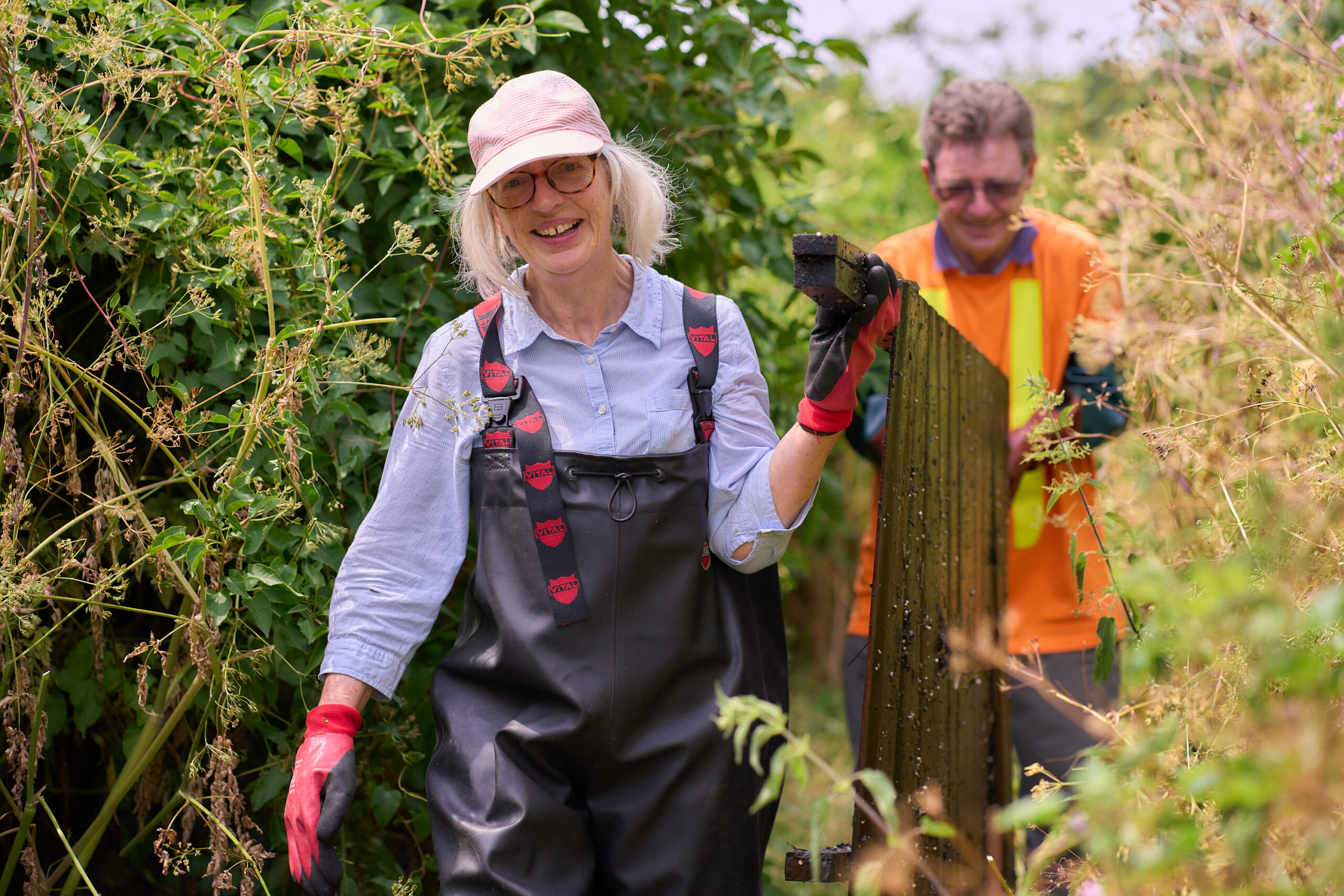
Photo:
BrookERS volunteers V.Midwinter and Eamonn Cannon during a volunteering
session to help clear the river in Edmonton, Enfield. Thames21 is
working with Enfield Council and the community to restore the borough’s
rivers. The volunteering sessions offer the chance to connect with
nature, get physically active, meet people and make a positive
difference to local areas. Credit: Josh Caius / Ashden
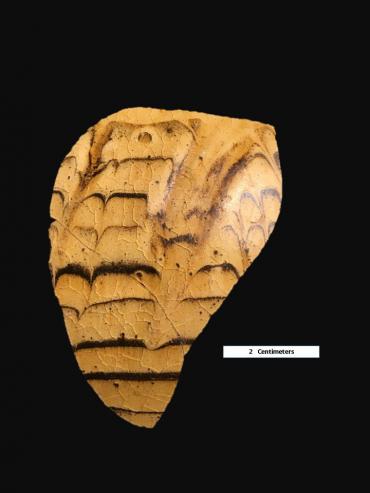
STAFFORDSHIRE SLIPWARE (1680 – 1750AD) The clay fabric is usually a pale buff colour, usually decorated with thin brown stripes and a yellow glaze, or yellow stripes and a brown glaze. This was the first pottery to be made in moulds in Britain since Roman times, and the main products were flat dishes and plates, but cups were also made.
1640-1750 Found everywhere. Fine cream fabric with white slip and pale yellow lead glaze with dark brown lines which were sometimes brushed with a feather while wet. First real industrial pottery, transported via the canal system. Mostly plates and dishes but some mugs and bowls
A bottle kiln is protected by an outer hovel which helps to create an updraught. The biscuit kiln was filled with saggars
of green flatwares (bedded in flint) by placers. The doors (clammins)
were bricked up and then the firing began. Each firing took 14 tons of
coal. Fires were lit in the firemouths and baited every four hours.
Flames rose up inside the kiln and heat passed between the bungs of
saggars. They controlled the temperature of the firing using dampers in
the crown. The firing was monitored by Bullers rings placed in the kiln. A kiln would be fired to 1250C.[4]
The biscuitwares were glazed and then fired again in the bigger (but lower temperature) glost kilns; again they were placed in saggars, separated by kiln furniture such as stints, saddles and thimbles.
The enamel kiln (or muffle kiln) is of a different construction,
with external flues, and was fired at 700C. The pots were stacked on
seven or eight levels of clay bats (shelves). The door is iron lined
with brick.
The brick walls of the inner kiln are around 12 in (300 mm) thick.
Around it are iron straps called "bonts". The chamber of the kiln is
round with a high domed roof. The floor is also slightly domed, with a
central well-hole, while around the walls there are a number of brick
bags (chimneys). The kiln was heated from below by a number of coal
fires which were stoked from exterior firemouths: the flues from the
firemouths pass under the floor to the well-hole and in doing so heated
the floor and the kiln. Directly above the firemouths, inside the kiln,
are the bags which provided additional chimneys and distributed the
direct heat from the flames, up the walls. The height and the diameter
of the kiln can vary, and consequently, so did the number of fire
mouths. The kiln is entered through a clammin which was designed to be
big enough to let in a placer carrying a saggar. The kilns are enclosed
in a brick hovel which can be free standing or be part of the workshop.[5]
Seatearth is a British coal mining term, which is used in the geological literature. As noted by Jackson,[1] a seatearth is the layer of sedimentary rock underlying a coal seam. Seatearths have also been called seat earth,
"seat rock", or "seat stone" in the geologic literature. Depending on
its physical characteristics, a number of different names, such as underclay, fireclay, flint clay, and ganister can be applied to a specific seatearth.
The brick walls of the inner kiln are around 12 in (300 mm) thick.
Around it are iron straps called "bonts". The chamber of the kiln is
round with a high domed roof. The floor is also slightly domed, with a
central well-hole, while around the walls there are a number of brick
bags (chimneys). The kiln was heated from below by a number of coal
fires which were stoked from exterior firemouths: the flues from the
firemouths pass under the floor to the well-hole and in doing so heated
the floor and the kiln. Directly above the firemouths, inside the kiln,
are the bags which provided additional chimneys and distributed the
direct heat from the flames, up the walls. The height and the diameter
of the kiln can vary, and consequently, so did the number of fire
mouths. The kiln is entered through a clammin which was designed to be
big enough to let in a placer carrying a saggar. The kilns are enclosed
in a brick hovel which can be free standing or be part of the workshop.[5]
Types
Buller Rings that were placed at top and bottom of a kiln. Note, bottom ring is slightly larger than the top ring
Rings
Rings are flat, hollow centred discs whose contraction is
proportional to the heat work experienced. A micrometer or gauge
measures the fired ring, with the difference being an arbitrary number
that is used to describe the firing regime experienced. Various grades
of ring, each of slightly different compositions, are available to cover
all firing conditions and temperature equivalents likely to be
encountered. Examples of pyrometric rings include Bullers Rings,[1] PTCR Rings and Thermorings.[2][3]
Bars
Bars are square sectioned, and mounted horizontally across two fixed
distance supports. During firing the softening of the material results
in sagging at the centre. Pyrometric Bars have found popularity in Kiln
Sitters, which uses the described deformation to act as a triggering
element, thus turning off the kiln at a desired point of maturity.
Examples of pyrometric Bars include Holdcroft Bars and "Orton Bars".
Cones are slender, three sided pyramids that are made from a range
of compositions, each composition with a reference number corresponding
to a certain heat work. Rather than shrink as rings do, a cone's tip
will bend forward to the same level as the base at the time of maturity.
Other deformations of a cone, such as bloating, cracking or bending
backward, can be appropriately interpreted to troubleshoot activity
inside the kiln.
Discs
Are calibrated ceramic disc-shaped devices. Examples include Bullers Process Control Discs and TempCHEKS.[4]
Innovative Thermal Solutions
Mantec
Refractories is a division of Mantec Technical Ceramics, a diverse
manufacturing technology company, with an historical pedigree spanning
more than 50 years, providing bespoke and innovative refractory
solutions to global industries. The company has its headquarters in
Stoke-on-Trent, the heart of the UK ceramics region. This area is world
famous for its ceramic expertise and heritage, which enables Mantec to
employ the very best in technical know-how. Mantec constantly strives to
remain industry specialists in all its fields of expertise and is able
to export its ceramic-based solutions around the world.
Mantec
provides a complete range of innovative, energy efficient and
ultra-lightweight refractory solutions to a broad range of industries
including: heavy clay, sanitaryware, tableware, kilns & furnaces,
technical & advanced ceramics, foundry, heat treatment.
In an
era of ever increasing fuel costs, Mantec Refractories offers solutions
for reducing overall kiln energy consumption costs and thus improving
manufacturing efficiencies and profits.
Our customers’ applications are served by a wide range of Bullers
Temperature Control Devices, which enable temperature ranges of 750°C –
1420°C / 1382°F – 2588°F (Bullers Rings) and and 1250°C – 1770°C /
2282°F – 3218°F (BPCDs) to be monitored.
Frequently Asked Questions
For answers to frequently asked questions about the use of Bullers, please click here for our Bullers FAQ document.
Contact Us
For further advice and information on our range of Bullers Temperature Control Devices follow the links above or email bullers@mantectc.com
Speciality Ceramics
Mantec Technical Ceramics supplies a wide range of speciality ceramics that are used extensively in applications such as:


 News
News

 1640-1750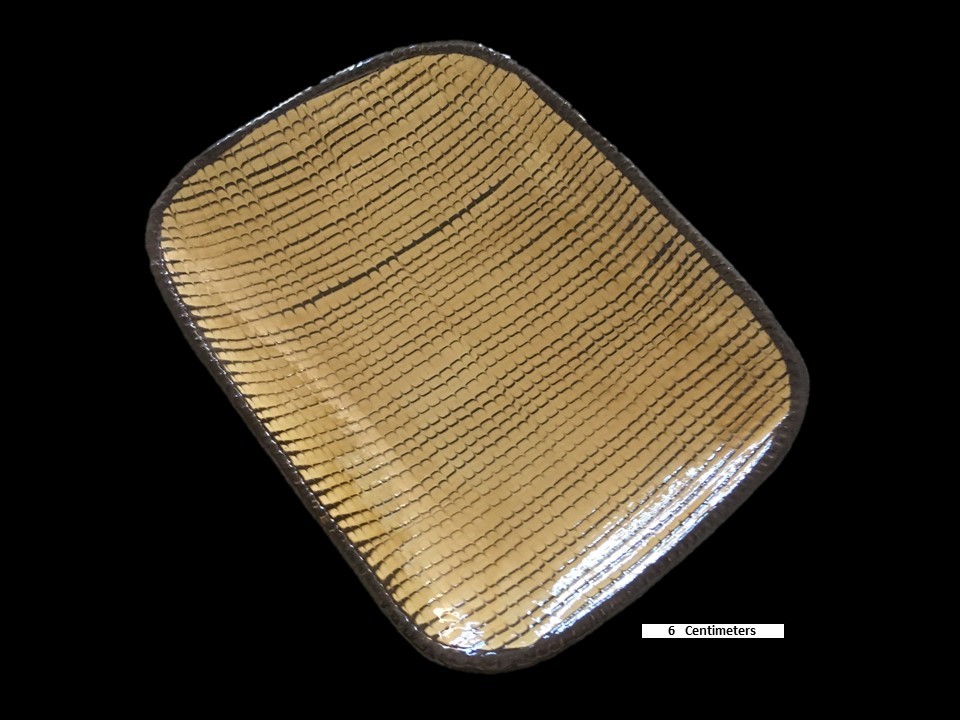




 Posts
Posts

