Sunday, 6 May 2012


Weir Hall


https://edithsstreets.blogspot.com/2012/04/pymmesbrook-pymmesbrook-flows-eastwards.html

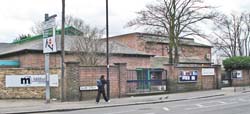
The Cambridge Hotel and Off Licence. Demolished when the roundabout was upgraded.
Weir Hall Library. Demolished when the roundabout was upgraded
Public toilets. Demolished when the roundabout was upgraded
Hollywood Gardens.  Sited on the site of Hedge Lane Gravel Pit given to Edmonton Borough Council in the 1930s for use as a public park and developed as Tatem Park. This ornamental garden was laid out on the level part of the site in the south some time later. The entrance has gates with red-brick piers and railings. In 1983 a central area was developed as a nature park with over 1,000 trees plus wild flowers and native grasses. On the corner with Great Cambridge Road is a plaque saying “These Gardens were opened on 21st June 1958 to honour Alderman A.J.G. Hollywood ex-Mayor of Edmonton”.
Wyerhall Nurseries. Market gardens on the land to the east of the road before housing developments.
Wyer-hall. An old house which took its name, from a family who owned property in Edmonton in the 14th. In the late 16thit belonged to Jasper Leeke, Esq. and it was later leased to the Huxley family. The site of the medieval house is not clear since nothing of that date was found on the site of the later house. A house was built by George Huxley in 1611 and this date was displayed in the house. Musket shot in the walls led to an idea that this originated from the Civil War .It was later used as a boarding house and demolished in 1818. The site became a market garden, and a wall and outbuildings survived into the 20th.

Hedge Lane
Tatem Recreation Ground.  Tatem Park is on the site of Hedge Lane Gravel Pit owned by the Harman sisters who gave the site to Edmonton Borough Council in the 1930s for use as a public park. It was opened in 1938 on an informal area made out of the quarry. There is a plaque which says “This ground was opened by Councillor R.A. Young Chairmen of the Edmonton Urban District Council 1936-7 on the 5th May 1937 In memory of James George Tatem the last of the Huxley-Tatem’s of Weir Hall. Presented by his nieces Ellen & Margaret Harman

Hermitage Lane
The Hermitage. The Hermitage seems to have been a house adjacent to Weir Hall.  It too had a moat along one side.
Wier Hall. With moat and boat house 1914. House was built on the current site of the park. It was used as a nursing home and then a boys' school and was demolished in 1934. This house was surrounded by a moat, averaging 30ft. wide. The banks slope upwards towards the centre of the interior site, where the house stood. It is fed by Pymmes Brook.
Wier Hall park. Strange park with mounds and hollows. Are these the remains of the moats around Wier Hall and the Hermitage or spoil heaps? On maps during the period of the Great War there appears to be a complex of small buildings on the northern end of the site
Sterling Way Open Space. Impenetrable woodland


https://ezitis.myzen.co.uk/stdavids.html

LOST HOSPITALS OF LONDON


St David's Hospital
 Millfield House, Silver Street N18


Medical dates:

Medical character:
1917 - 1971

Epilepsy


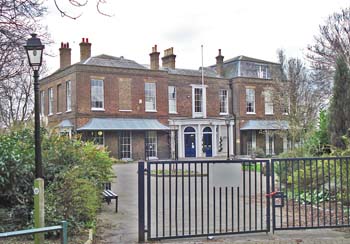
Millfield House was originally built in 1849 as an orphanage for children of the Strand Poor Law Union.  An infirmary was added in 1874.

At the beginning of WW1 the building was used to house Belgian refugees.  In 1917 it was sold to the Metropolitan Ayslums Board, who used it as a hospital for 300 male 'sane epileptics' (the Edmonton Epileptic Colony).  The female equivalent was St Faith's Hospital in Brentwood.

Control of the hospital passed to the LCC in 1930.  It was renamed St David's Hospital, when it had 328 beds.

It became a regional centre for epilepsy and, in 1960, had 271 beds, all for epileptic patients.  It was planned to close the Hospital in the late 1960s and redevelop the site for mentally handicapped patients.  But public policy changed and the project was never carried out.

St David's Hospital closed in 1971 and the patients were transferred to St Faith's Hospital.

Present status (March 2008)

The Grade II listed Georgian building, Millfield House, is now part of the Millfield Arts Centre, the other part being a new purpose-built theatre on the west side of the site.  The gatehouse and lodge remain, as well as a tall narrow building.


Millfield House
Millfield House is now a Grade II* listed building.

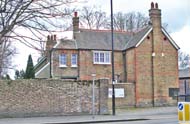
The Lodge  entrance
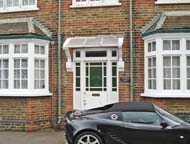
The Grade II listed Lodge from Silver Street (left).  The entrance to 'Saint David's Lodge' (right).

Lodge from within
The Lodge from within the garden.


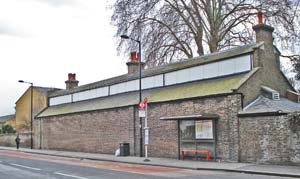
tall narrow building
A tall,  narrow, clerestorey-roofed building behind the wall -  previously an outbuilding for the orphanage school

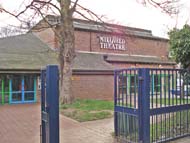
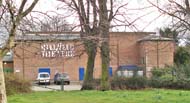
Millfield Theatre  theatre
The Millfield Theatre (left).   The west side of the theatre seen from across the garden (right).

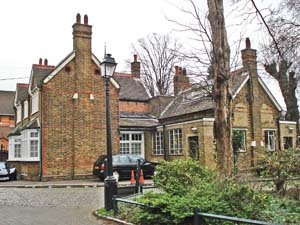
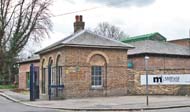
St David's Hospital gatehouse
The gatehouse (left) and the west wall (right).


References
http://en.wikipedia.org
www.1900s.org.uk
www.aim25.ac.uk
www.british-history.ac.uk
www.britishlistedbuildings.co.uk (1)
www.britishlistedbuildings.co.uk (2)
www.parksexplorer.org.uk


Return to alphabetical list
Return to home page


Wednesday, 29 February 2012

Poor plumbing blights purity of area’s rivers


Wednesday, February 29, 2012 


Advertiser, Gazette & Herald Series 5 


www.northlondon-today.co.uk 


Twitter @NrthLondonNews 


Poor plumbing blights 
purity of area’s rivers 


By Denise Roland 

BAD plumbing is poisoning the borough’s rivers as sewage 
spews straight out into brooks from countless homes. 

Waste pipes across the borough are wrongly connected to 
rainwater pipes and carry the dregs from toilets, dishwashers 
and washing machines straight into Pymmes Brook and 
Salmons Brook. 

Theo Thomas, from waterways charity Thames 21, said: 
“This problem has been going on for decades, for as long as 
there have been houses with drains.” 

Parts of Salmons Brook and Pymmes Brook had the worst 
water quality in a study of eight of the feeder rivers of the 
River Lee by Thames 21. 

The report said that these tributaries have severe problems 
with water quality. They are blighted with faecal bacteria and 
chemicals from detergent, and the oxygen levels are too low 
for fish to survive. 

Mr Thomas said: “It is the homeowner’s legal responsibility 
to make sure their pipes are connected properly even if the 
current homeowner had nothing to do with the plumbing 
being installed.” 

Pipes from bathrooms and kitchens should all lead into a 
large black pipe and not the narrower grey one. 

Andy Love, MP for Edmonton, said: “It was a devil of a job 
to correct the same problem we had with the Pymmes Park 
lake a few years ago. Thames Water ended up building a 
bypass to redirect polluted water away from the lake. 

A team of 14 volunteers have been wading through the 
sewage-contaminated Pymmes Brook recently clearing out 
fridge-freezers, DVDs and even an old bottle of poison. 

Volunteer Marc Ellul, 21, said: “It’s such a shame that it’s 
come to this. The river used to have grand royal houses around 
it and now it has become a landfill site. 

“It’s brilliant that people are taking action into their own 
hands.” 


Poor water quality: Theo Thomas at Pymmes Brook 


Natalie Slater, from Thames Water, said: “We need home- 
owners to ensure their drains are connected to the sewer drains 
and not the surface water drains. Thames Water can put peo¬ 
ple in touch with a suitable plumber.” 

If you think your pipes might be misconnected, call Thames 
Water on 0845 9200 800. 

To get involved in the clean-up email aimee.felus 
@thames21. org. uk 

Sunday, 1 January 2012